
Florida Flooding Insurance Claim Help: What to Do Now
THIS IS A SOLICITATION FOR BUSINESS. IF YOU HAVE HAD A CLAIM FOR AN INSURED PROPERTY LOSS OR DAMAGE AND YOU ARE SATISFIED WITH THE PAYMENT BY YOUR INSURER, YOU MAY DISREGARD THIS ADVERTISEMENT.
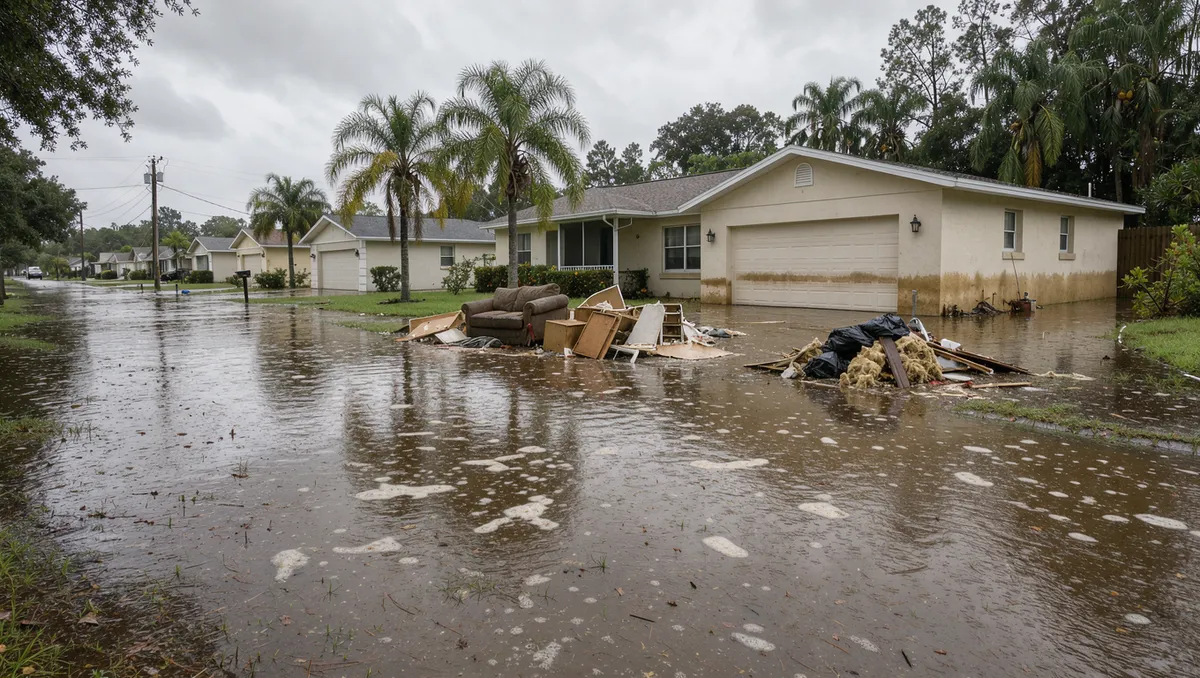
Flood damage from the early November rains in Florida? Start two claims if you have two policies: a flood claim for rising water and a homeowners claim for anything wind or roof related. Photograph everything before it goes to the curb, and file each claim right away. A licensed public adjuster can document the loss and handle the back-and-forth with each insurer for you.
A slow-moving low pressure system parked over the Florida Peninsula from October 31 to November 2 and dropped record rain on the east coast and the interior. Parts of Brevard County saw more than two feet of rain, Palm Beach County had more than 19 inches in about 12 hours, and water got into thousands of homes from Palm Bay to Riviera Beach. More heavy rain on November 17 put over 10 inches on parts of Broward County, including Fort Lauderdale, Hollywood and Davie. If your home or business took on water, this page covers what to do now, how flood and homeowners claims differ, and the deadlines that apply.
Where the State of Emergency Applies
Governor DeSantis declared a state of emergency for the flooding in Executive Order 26-227 on November 2, covering Brevard, DeSoto, Hardee, Highlands, Indian River, Martin and St. Lucie counties. Executive Order 26-228 on November 4 added Glades, Hendry, Lake, Okeechobee, Palm Beach, Seminole and Volusia counties. Executive Order 26-232 on November 18 added Broward, Duval, Flagler, Miami-Dade, Monroe, Putnam and St. Johns counties, for 21 counties in all. The National Weather Service expects flooding along the St. Johns River to last for weeks, so more damage may show up downstream.
Florida has asked the federal government for disaster help for this flooding, starting with Brevard, DeSoto, Hardee, Highlands, Indian River, Martin, Okeechobee, Palm Beach and St. Lucie counties. As of November 18, the White House said FEMA was still reviewing the Governor’s request, and no federal declaration had been approved yet. Check the FEMA link at the bottom of this page for the current status. Brevard County asks residents to report damage through its online damage report, which helps the county document losses.
Talk to a licensed public adjuster
Tell us what happened and a public adjuster will call you back.
1. Safety First, Then Pictures
Floodwater can hide washed-out roads, sinkholes, live wires and sewage. Stay out of standing water, and do not turn the power back on in a flooded home until an electrician says it is safe.
Once it is safe, photograph and video everything before anything is moved, cleaned or thrown out. Get the high-water line on walls, cabinets and the garage door, the outside of the home from every side, and every damaged item. More is better!
2. Dry Out Fast and Keep Every Receipt
Your policies expect you to protect the property from more damage. Get the water out, pull wet carpet and pad, cut out soaked drywall and start drying so mold does not set in. Keep a small sample of the flooring and drywall if you can, and save every receipt, from fans and dehumidifiers to hotel bills. Hold off on permanent repairs until the damage is documented.
3. Report Each Claim Right Away
Call your flood insurer and your homeowners insurer as soon as you can, even if you do not know the full extent of the damage yet. Write down each claim number and the name of each adjuster.
4. Get a Copy of Every Policy
Ask for a complete copy of your flood policy and your homeowners policy, not just the declarations pages. You need the limits, deductibles and exclusions in front of you before you can judge any offer.
5. Keep a Claim Diary
Every call, email and inspection gets a line: the date, who you talked to and what they said. Put requests in writing and save copies. Details matter!
6. Be Careful Who You Sign With
After every big flood, out-of-town contractors and bad actors show up fast. Do not sign anything you have not read, and do not hand over an insurance check or sign an assignment of benefits under pressure. Anyone who adjusts your claim for a fee in Florida must hold a Florida public adjuster license, and you can look one up on the Florida Department of Financial Services website before you sign.
Flood Policy vs. Homeowners Policy
Most homeowners policies do not cover rising water or surface flooding. That damage is usually covered only by a separate flood policy through the National Flood Insurance Program (NFIP) or a private flood insurer. Rain that came in through a damaged roof or window is a different kind of loss and usually goes to your homeowners policy, so a single home can have two claims.
NFIP flood claims follow federal rules. The Standard Flood Insurance Policy generally asks for a signed proof of loss within 60 days of the loss, unless FEMA extends the deadline, and building and contents limits are separate. Learn more at FloodSmart.gov and on our flood insurance claim page.
Florida Deadlines for Your Homeowners Claim
Under Section 627.70132 of the Florida Statutes, you generally have 1 year from the date of loss to report a new claim or reopen a claim on a homeowners or condo policy, and 18 months to file a supplemental claim for damage you find later.
Section 627.70131 of the Florida Statutes sets timelines for your insurer on residential claims. In general, the insurer must acknowledge your claim communications within 7 days and must pay or deny the claim, in whole or in part, within 60 days after it is notified of the claim. Our Florida water damage claim guide covers water and mold limits and long-term leak denials.
Other Places to Get Help
- Federal disaster declarations and status: fema.gov/disaster/declarations
- Applying for federal disaster assistance, if it is approved for your county: DisasterAssistance.gov
- Flood insurance claims and the NFIP: FloodSmart.gov
- Florida Department of Financial Services insurance consumer helpline: 1-877-693-5236, or myfloridacfo.com
How We Can Help
We represent policyholders only. We do not work for any insurance company. Our licensed public adjusters document the damage, prepare a detailed estimate and handle the negotiation with your insurer on flood and water damage claims for homeowners, condominium associations and businesses. Our corporate office is in Tampa, and we work with property owners across Central and South Florida.
For a Governor-declared emergency, Florida law caps public adjuster fees at 10% on residential and condo claims made within one year of the declaration (FS 626.854(11)).
If your claim was denied or the offer looks low, browse all of our claim guides.
Talk to a Licensed Public Adjuster
We represent policyholders only. Call us any time, day or night, and we will walk you through your options.
Licensed in Florida
Ronald F. Delo
Licensed Public Adjuster
Florida License A065774
Insurance Claim Consultants
711 S. Howard Avenue, Suite 200
Tampa, FL 33606
This page is general information, not legal advice or a statement about whether any loss is covered. Every policy is different. Last reviewed: November 23, 2026.
SERVICES
CLAIM TYPES
Industry Affiliation



Advertisements

This advertisement is made under the public adjuster licensure of Ronald F. Delo Florida License Number: A065774
